
Rinse & Repeat
WORDS Tamarisk McNalty Stephens
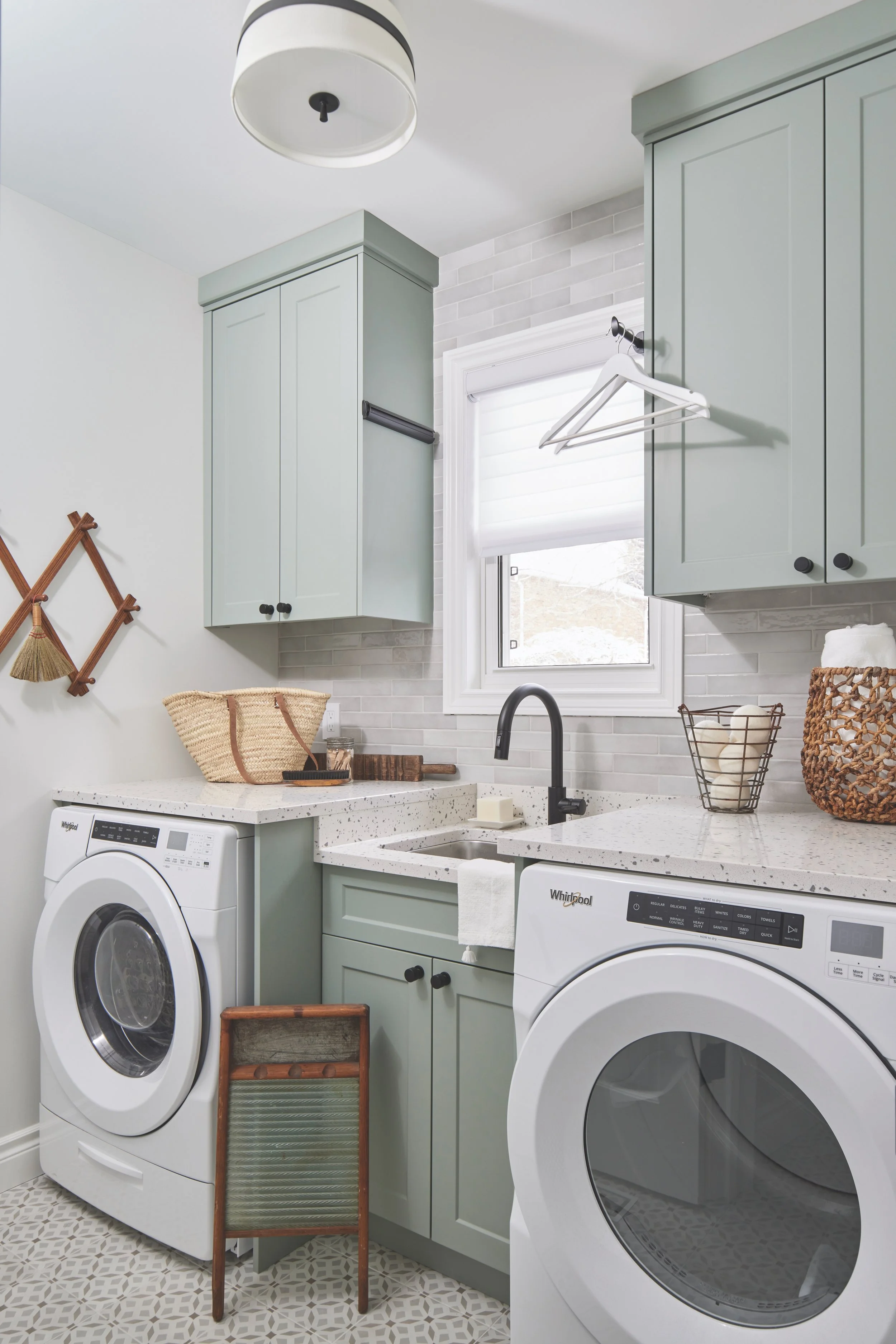
PHOTO: JASON HARTOG
The laundry room is a hard-working space, as washing is a part of daily life, and the task itself is an act of service for our family and those we love. Embrace the laundry room as the cleaning headquarters of your home by designing it for functionality and organizing it to maximize efficiency. Add elements that reflect your style to make it a space you feel good in.
Regardless of size, most laundry spaces have a few things in common, including a washing machine, dryer, workbench/ folding countertop, drying racks, dirty clothes hamper, cabinetry or shelving, deep sink for soaking, iron, ironing board or steamer, and other household cleaning supplies.
When designing a laundry room, consider how you prefer to get the job done, as the needs of the space can vary depending on your laundry system. Some people pre-soak, while others do not. Some rarely iron, while others iron nearly every item. Some people are precise sorters, while others are not. Some people line-dry or hang-to-dry, while others do not. These factors affect the requirements of the space.
An important consideration for every laundry room is to provide a sufficient path of travel into, out of, and around the space (especially when carrying a basketful of laundry), and appropriate clearance in front of the machines (aim for a minimum of 42 inches).
The best ergonomics for your body and the tasks of bending, reaching and lifting may dictate whether your machines should be on pedestals, side by side or stacking, front or top load, etc. Cabinetry above your washer and dryer should be deeper than standard uppers and not as far above the machines as a typical offset so you can access and utilize this storage more easily. If you are installing a hanging rod, leave between 36 and 39 inches of hanging space between the rod and the countertop.
AyA KITCHENS: Laundry Hamper – Tilting
SOME TIPS:
Locating essentials within easy reach keeps things simple and efficient.
Incorporating a generous folding surface is useful for sorting and stacking clean clothing.
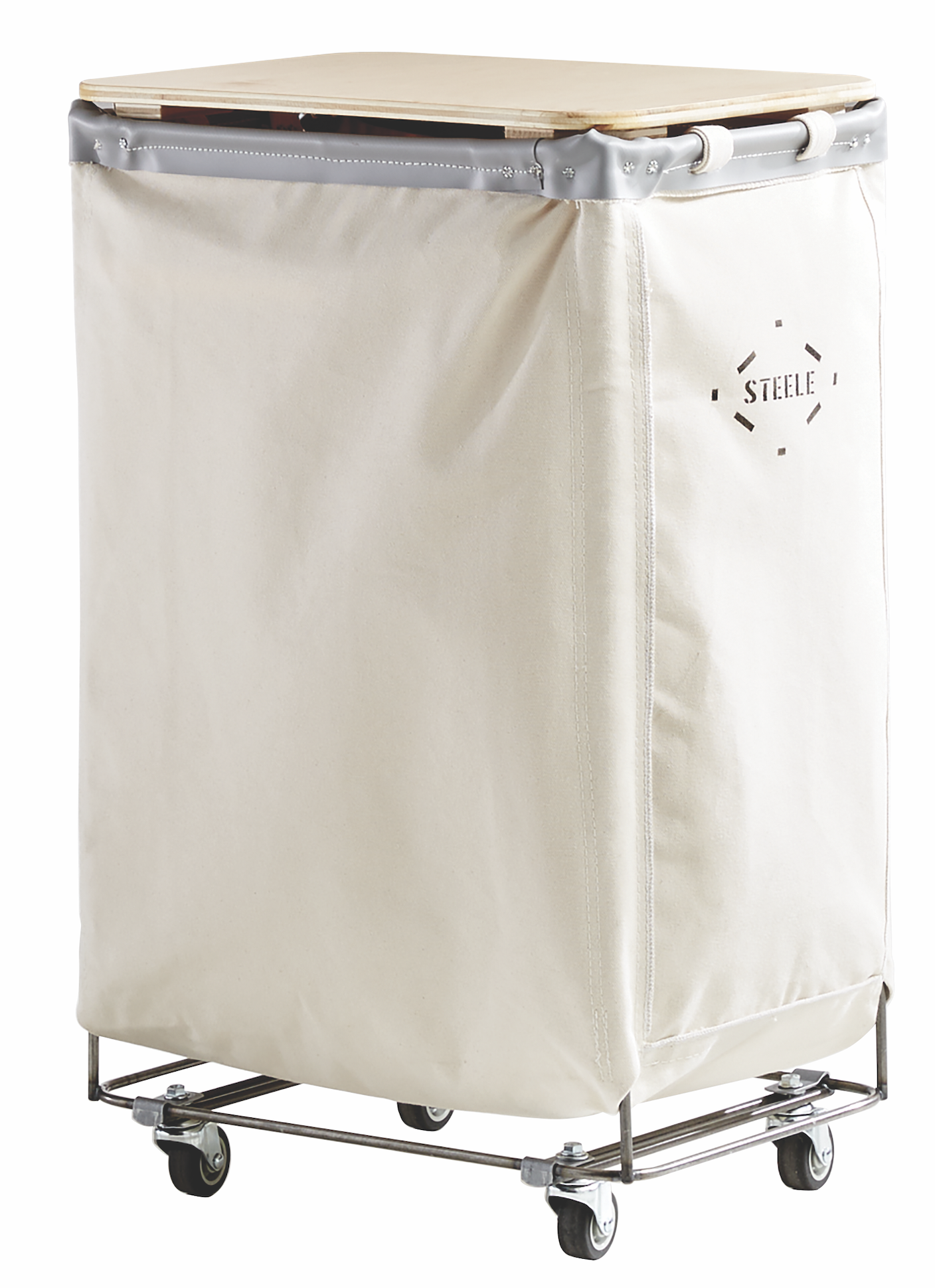
Including a space for multiple hampers is helpful to separate clean clothes from dirty, and for sorting different loads.
Utilizing closed storage is more practical than open shelving. For one, cleaners and detergents are often unsightly items, and secondly, if you use the dryer frequently, a lot of lint/dust is generated.
Selecting baskets and hampers made from natural materials such as wicker, wool, and canvas is generally much more attractive than their plastic counterparts and a more sustainable option.
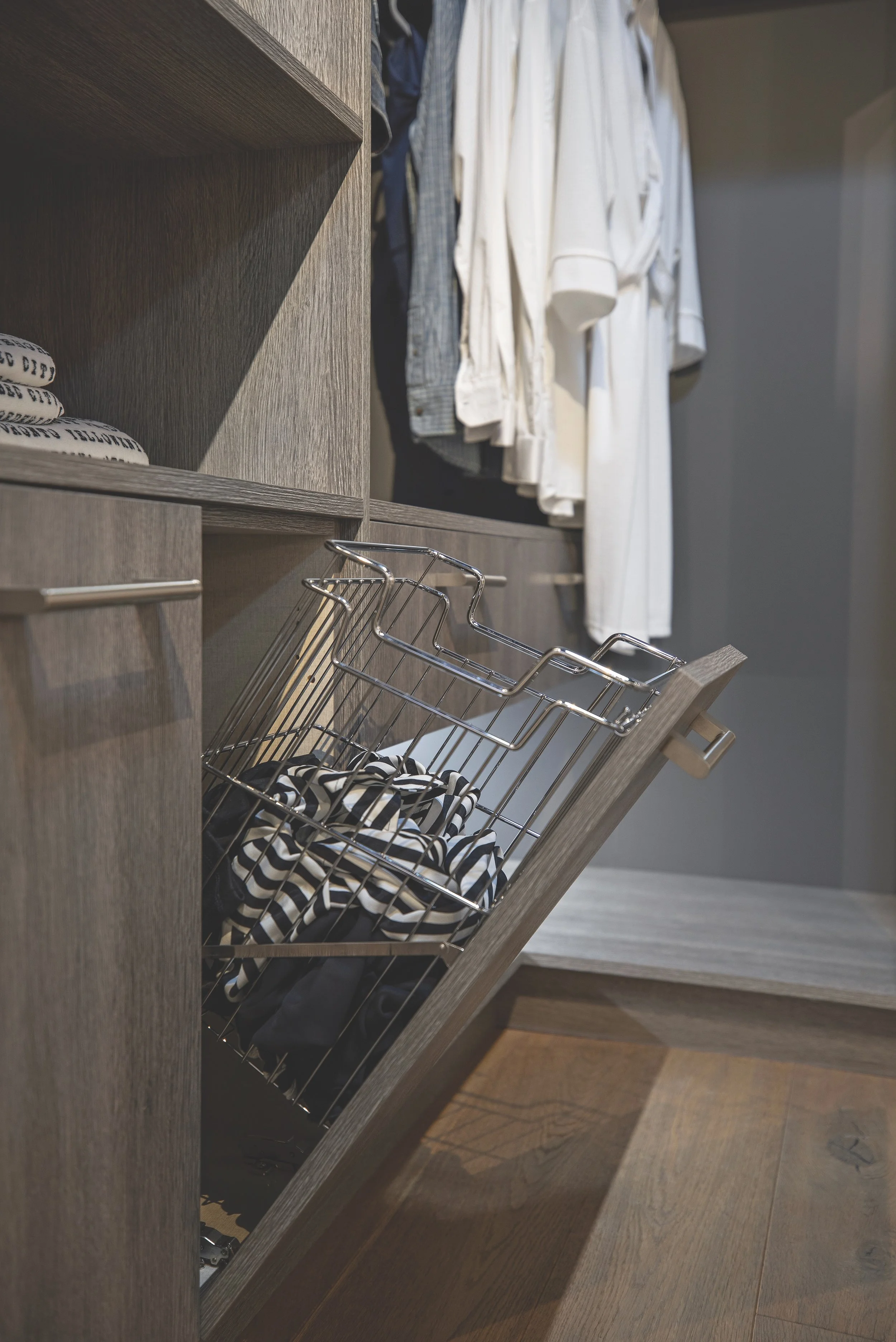
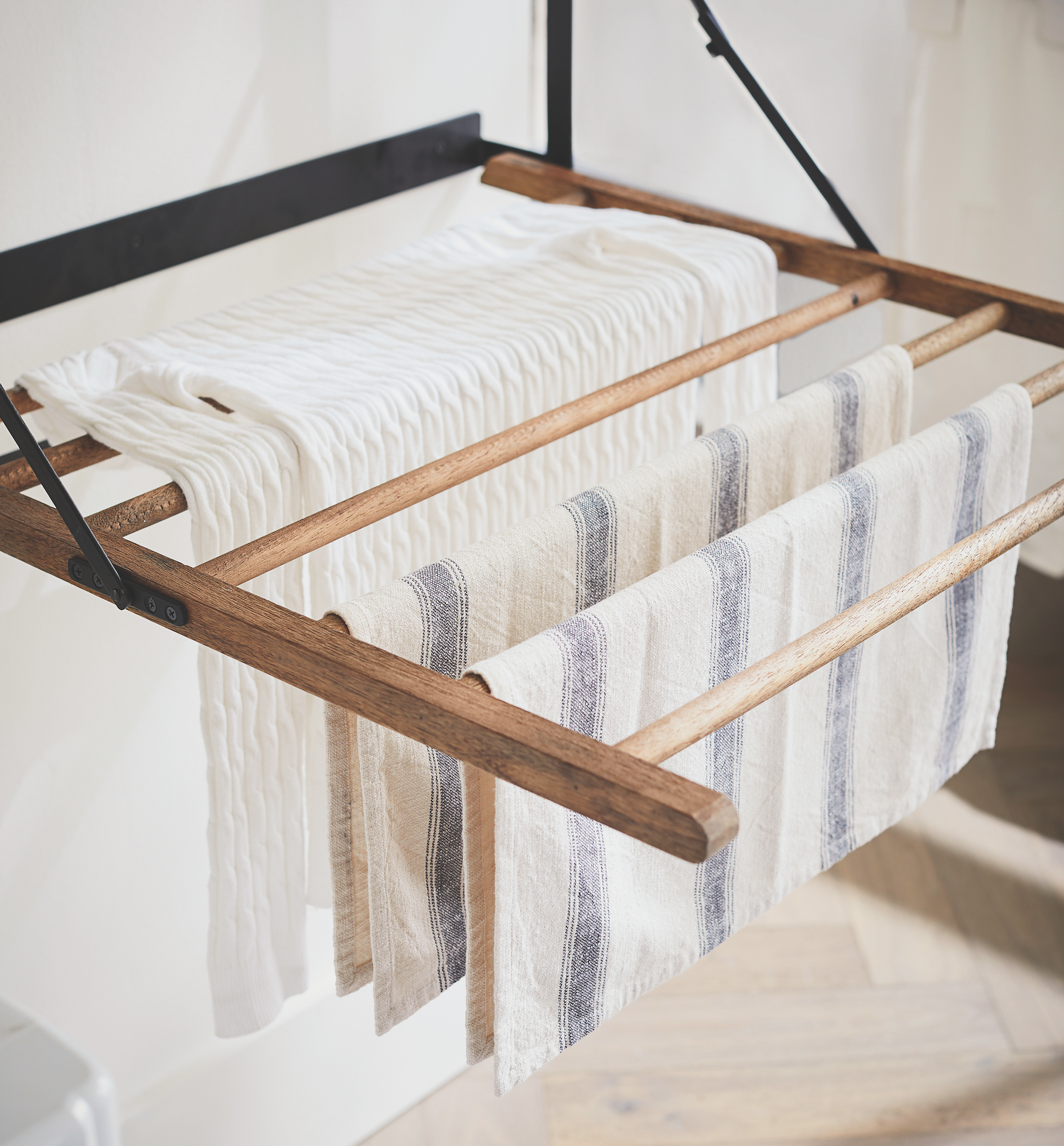
Installing pull-out laundry bins concealed behind cabinetry keeps things looking tidy. There are also racks that can be integrated into cabinetry that pull out to provide a surface to lay items flat to dry (such as wool garments that can be easily misshapen if hung up when wet).
Choosing resilient, hard-working materials and finishes such as paint-grade wood wainscotting, tile flooring, scrubbable paint and durable countertops will stand up to laundry baskets bumping the walls, wet items dripping across the floor and cleaners and detergents that can damage more delicate counter materials (such as marble).
POTTERY BARN: Trenton Laundry Drying Rack
Follow the machine recommendations for load size – your clothes don’t get clean if you overload your washer.
Caring for clothing and linens as per their instructions might take you more time, but in the long run, you will extend the life of your clothing (and save money).
Giving your clothing a shake and a snap before line-drying gets the wrinkles out. Folding items as soon as they come out of the dryer or off the line avoids double handling (and reduces time spent ironing!).
CRATE & BARREL: Steele 2.5-Bushel Canvas Vertical Rolling Laundry Hamper with Wood Lid
Every few months, give your laundry space a deep, thorough clean. Wipe the machines inside and out, clean the filters and vacuum the areas around and behind them. Remember to clean the dryer lint trap after every use. Take everything out of storage cabinetry and off any shelves and purge what you no longer use or need. Wash the walls, ceiling, doors, trim, cabinetry and floors. Spray and wipe all surfaces (disconnect appliances from power sources, as required), and give the sink and faucet a good scrub. Open the window to get fresh air circulating. OH